
Story of Safa and Marwa

- January 11, 2026
- umar
- 4:34 pm
Safa and Marwa: A Legacy of Faith and the Miracle of Zamzam
The pilgrimage of Hajj and Umrah stand as profound pillars of faith in Islam, journeys undertaken with hearts yearning for spiritual cleansing and divine proximity. At the very core of this sacred voyage lies a timeless story of unwavering trust, a mother’s desperate love, and a miracle that shaped history. This is the story of Safa and Marwa, two hills within the Masjid al-Haram in Makkah. The ritual of Sa’i—walking and jogging seven times between these two points—is not merely a physical act but a re-enactment of this foundational narrative. To perform Sa’i is to complete an integral pillar of your Umrah, embodying a legacy of faith that every pilgrim is invited to make their own.
The Terrain of Trial: What Are Safa and Marwa?
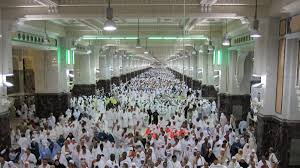
Safa and Marwa are two historical hills, now seamlessly integrated within the vast architecture of the Grand Mosque in Makkah. They are connected by a long, air-conditioned marble corridor that makes the ritual accessible to all. The total distance covered in one complete circuit between them is approximately 450 meters, meaning pilgrims striving in the path of Sa’i cover roughly 3.15 kilometers in total.
Today, this path is a place of serene devotion, but its significance is rooted in a starkly different past—a barren, lifeless valley where a single story changed everything.
A Legacy of Legends: Ibrahim, Hajra, and Ismail
The narrative begins with the noble family of Prophet Ibrahim (Abraham, peace be upon him). His wife, Hajra (Hagar), was blessed with a son, Ismail (Ishmael, peace be upon him), in the later years of Ibrahim’s life. In a supreme test of faith, Allah commanded Ibrahim to leave his infant son and the child’s mother in the uninhabited valley of Bakkah—what we now know as Makkah.
With a heart heavy with divine obedience, Ibrahim left them with only minimal provisions. As he walked away, Hajra called after him, “O Ibrahim! Where are you going, leaving us in this valley where there is no person or anything else?” She asked this repeatedly, but when she understood it was the command of Allah, her resolve steeled. She said, “Then Allah will not cause us to be lost.”
A Mother’s Struggle: The First Sa’i
The provisions soon ran out. Under the relentless desert sun, the infant Ismail grew weak from thirst. Bibi Hajra, witnessing the suffering of her child, was gripped by a desperation known only to a mother. She could not sit idly by.
Scanning the desolate horizon, she saw the hill of Safa in the distance, the highest point in the valley. Thinking she might see a passing caravan or a trace of water, she climbed it. She looked intensely in every direction but saw nothing. She then descended and ran across the valley to the hill of Marwa, her eyes searching, her heart pleading. She repeated this journey—seven times between Safa and Marwa.
In her final ascent of Marwa, exhausted and filled with anguish for her child, she heard a sound. Turning, she witnessed a miracle. At the feet of the struggling Ismail, the angel Jibril (Gabriel, peace be upon him) struck the ground with his wing, and water began to gush forth. Bibi Hajra rushed to contain the precious spring, saying “Zam! Zam!” (Stop! Stop!), giving the blessed well of Zamzam its eternal name.
From Wilderness to Wonder: The Birth of a Sanctuary
This miraculous water did not just save two lives; it transformed the valley. Birds, drawn to the water source, circled overhead. Travelers from the tribe of Jurhum, seeing the birds, investigated and found Hajra and Ismail by the life-giving spring. With her permission, they settled there, and the barren land of Makkah began its journey to becoming the vibrant, spiritual heart of the world.
As the angel Jibril had foretold to Hajra, Prophet Ibrahim (peace be upon him) later returned, and together, father and son—Ibrahim and Ismail—were commanded to build the Kaaba, the House of Allah, at this very site.
The Living Lesson: Why We Perform Sa’i Today
The command for pilgrims to perform Sa’i is a divine injunction to internalize this epic lesson. It is an active immersion in the values that define a believer’s relationship with Allah:
- The Power of Tawakkul (Complete Reliance): Hajra’s story is the ultimate example of trusting Allah’s plan after taking every conceivable human effort.
- The Strength of a Mother’s Dua: The ritual honors the unwavering faith and powerful supplication of a righteous woman whose prayers were accepted in the most magnificent way.
- Patience in Peril (Sabr): Every step of Sa’i is a reminder that relief (Faraj) follows difficulty. The pilgrim walks, sometimes jogging in emulation of Hajra’s urgency.
- Divine Care in Desolation: The story assures every believer that no soul is ever alone or forgotten by Allah, even in the most isolating of circumstances.
When you walk between Safa and Marwa, you are not covering mere distance; you are tracing the path of a legacy.
Your Journey, Our Support: Walking This Path with You
Understanding the deep spiritual weight of Sa’i transforms it from a ritual into a profound personal experience. As your host for this sacred journey, Umrah Hosting ensures that your focus remains solely on this spiritual connection.
We handle all logistical concerns—from securing accommodation close to the Haram to facilitate your visits, to arranging seamless ground transportation through our Saudi taxi services. Our experienced guides are here not just to show you the way, but to help you connect with the meaning behind each step.
Begin your journey in the footsteps of the faithful. Browse our Umrah Packages and let us help you prepare for a pilgrimage where every step resonates with the timeless echo of a mother’s faith.